
62% Fewer Running Injuries After Gait Retraining and Most Runners Still Ignore It
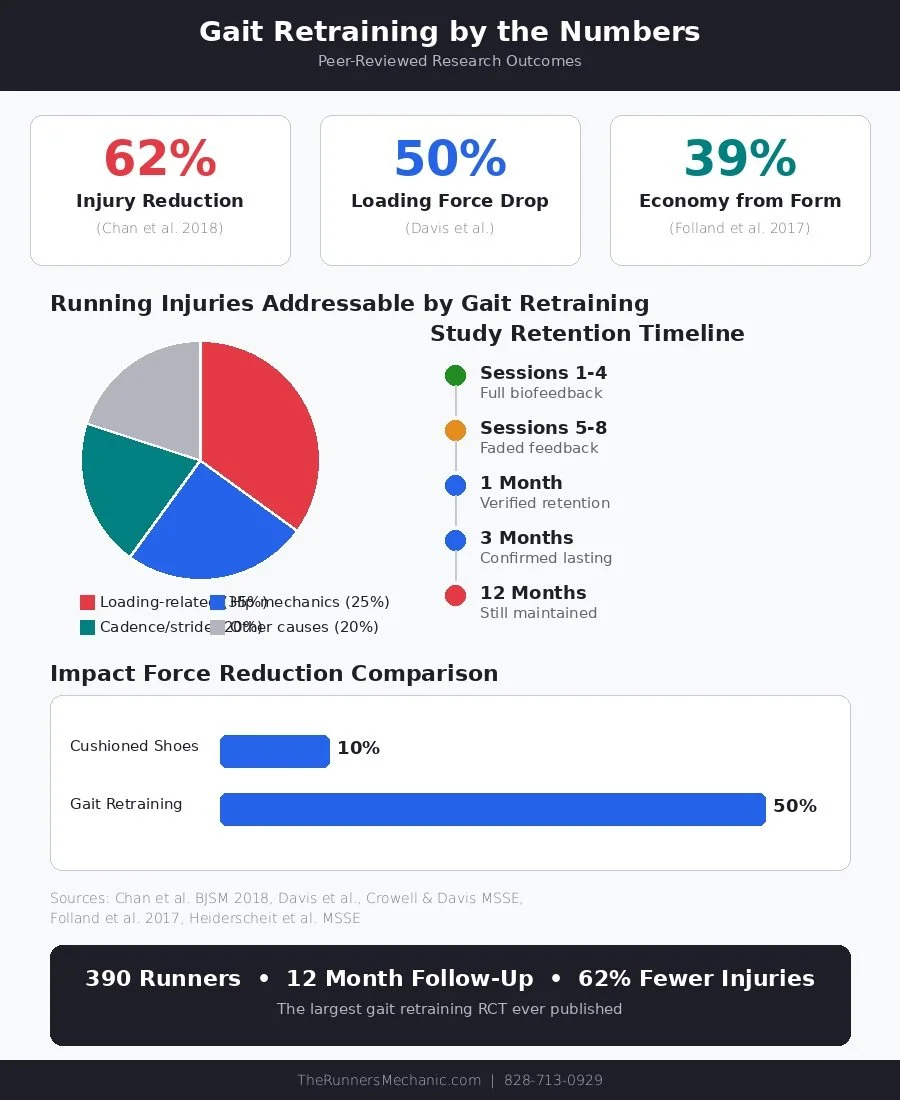
A 2018 clinical trial followed 390 novice runners and found that those who completed a gait retraining program suffered 62% fewer injuries over the next 12 months compared to runners who trained without any biomechanical correction. That single statistic rewrites everything you thought you knew about injury prevention.
Running shoes with thick cushioning reduce impact forces by roughly 10%. Gait retraining reduces those same forces by up to 50%. The gap between what most runners rely on and what actually works is enormous. And the fix takes just eight 15-to-30-minute sessions spread across two to four weeks.
“Runners who completed real-time gait retraining experienced a 62% reduction in injury rates over 12 months compared to controls”
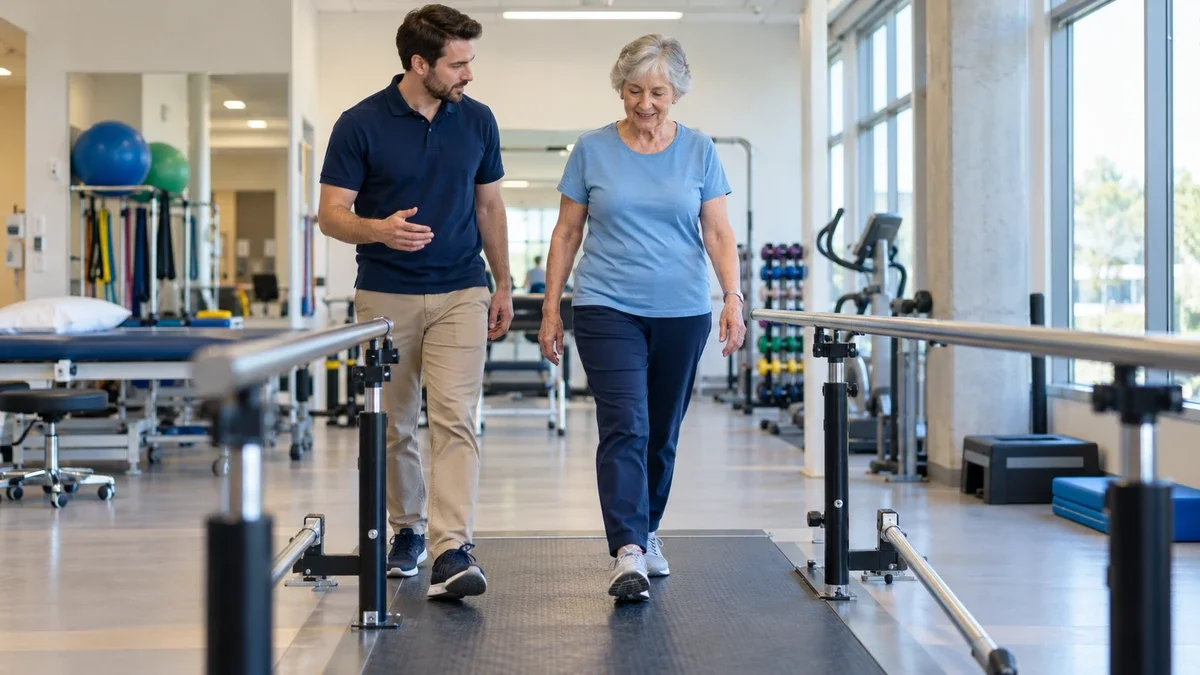
Gait retraining is not about memorizing a checklist of running form tips from social media. It is a structured clinical process where a physical therapist uses real-time visual and auditory biofeedback to change the way your brain controls your stride. The corrections happen at the neuromuscular level, which is why they stick long after the sessions end.
If you have been running through the same knee pain, shin splints, or IT band problems for months or years, the issue is not your shoes or your foam roller. The issue is your movement pattern, and gait retraining is the only intervention with peer-reviewed evidence showing it can permanently change that pattern.
What Is Gait Retraining and Why Running Form Drills Are Not Enough
Gait retraining is a clinical intervention where a trained physical therapist uses instrumented feedback to modify specific biomechanical variables in your running stride. It targets measurable faults like excessive vertical loading rate, overstriding, hip drop, and crossover gait patterns that traditional coaching cues cannot reliably fix.
The difference between gait retraining and the running form tips you find online is precision. A coached cue like "land softly" gives your brain a vague instruction. Gait retraining gives your brain a real-time number, a visual target, or an auditory signal tied to a specific biomechanical metric. Your nervous system processes that feedback and makes the motor correction automatically, often within the first session.
A landmark study by Willy and Davis demonstrated why strengthening alone does not change how you run. Runners in that trial completed six weeks of hip strengthening and made significant strength gains, but their running form during actual running did not change at all. Strength without neuromotor reprogramming is like adding horsepower to a car with bad alignment. The engine is stronger, but the tires still wear unevenly.
Gait retraining addresses the alignment. It works at the level of motor control, rewiring the automatic movement patterns your brain has repeated thousands of times per run. And because the protocol uses a systematic fading approach, those new patterns become your default within weeks.
At The Runner's Mechanic in Asheville, Miriam Salloum integrates gait retraining into every runner's evaluation and treatment plan. The clinic's all-inclusive runner's evaluation includes high-speed video analysis that identifies exactly which biomechanical variables need correction before the retraining begins.
The Faded Feedback Protocol That Rewires Your Stride in 8 Sessions
The gold standard for gait retraining is the faded feedback protocol developed by Dr. Irene Davis at the Spaulding National Running Center at Harvard Medical School. This protocol has been validated across multiple clinical trials and forms the backbone of evidence-based gait retraining worldwide.
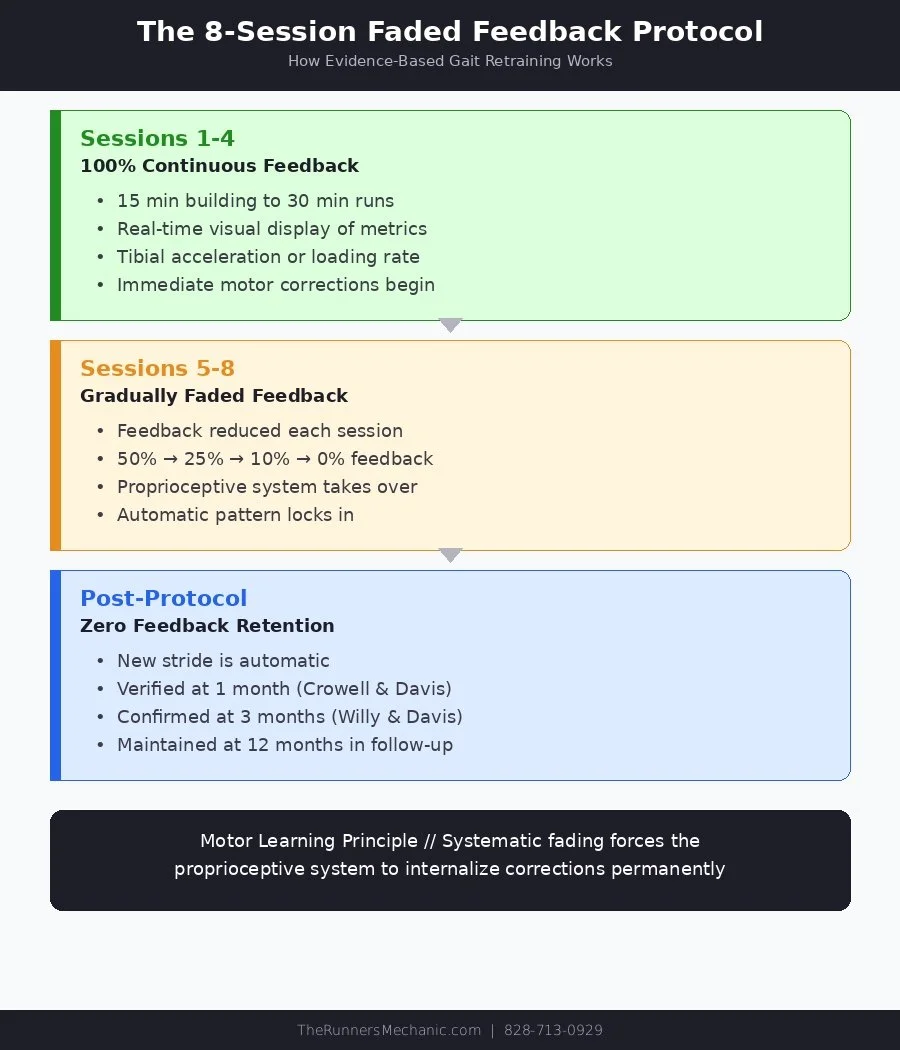
The protocol runs eight sessions over two to four weeks. Each session starts at 15 minutes and builds to 30 minutes of treadmill running with real-time biofeedback. The feedback can be visual, auditory, or both, depending on which biomechanical variable the clinician is targeting.
Here is what makes faded feedback different from just running with a mirror or a metronome on your own. During the first four sessions, you receive continuous feedback. A screen in front of you shows your tibial acceleration, your vertical loading rate, or your step rate in real time. You can see every stride reflected back as a number or a graph, and your brain starts making micro-adjustments immediately.
During sessions five through eight, the clinician systematically reduces the feedback. Session five might show feedback for only half of each running interval. Session six reduces it further. By session eight, you are running with zero external feedback, but your stride has already internalized the correction.
"The faded feedback approach produced lasting reductions in vertical loading rates maintained at one month and in one case verified at one year follow-up" Crowell and Davis Medicine and Science in Sports and Exercise
This fading process is grounded in motor learning science. When feedback is available 100% of the time, your brain relies on it as a crutch. When it gradually disappears, your proprioceptive system is forced to take over. The result is a permanent change in your automatic running pattern rather than a conscious correction you have to remember.
Runners who try to fix their form by watching YouTube videos or counting steps on their own are skipping this entire neurological process. Without systematic fading, conscious corrections rarely transfer into automatic movement patterns. You might hold perfect form for 10 minutes, but by mile three your brain reverts to whatever pattern it has repeated for the last five years.
Real-Time Visual Feedback and Mirror Cueing for Running Mechanics
Visual biofeedback is the most widely studied method in gait retraining research. The runner watches a live display of a specific biomechanical metric while running on an instrumented treadmill, and makes stride adjustments in real time based on what they see.
The visual target depends on the biomechanical fault being corrected. For a runner with excessive impact loading, the screen might display their vertical ground reaction force as a bar graph that turns green when they stay below a threshold and red when they exceed it. For a runner with overstriding, the display might track tibial inclination angle at initial contact.
Mirror-based gait retraining is a simpler but effective variant studied by Willy and Davis. In their protocol, runners watched themselves in a full-length mirror positioned in front of the treadmill while a clinician provided verbal cues about hip and knee alignment. The runners successfully reduced their peak hip adduction during running, and those improvements held at a three-month follow-up with no additional feedback sessions.
The power of visual feedback is that it bypasses the verbal processing bottleneck. When a coach says "keep your hips level," your brain has to translate those words into a motor command. When you see your own pelvis dropping on a screen in real time, your brain makes the correction reflexively. Research on motor learning consistently shows that visual feedback produces faster skill acquisition than verbal instruction alone.
At The Runner's Mechanic, Miriam uses high-speed video analysis as part of the runner's evaluation to capture exactly how each runner's body moves through every phase of the gait cycle. This visual data becomes the foundation for targeted retraining, so every correction is driven by objective measurement rather than guesswork.
Auditory Feedback and Metronome Cadence Training That Sticks
Auditory biofeedback uses sound to modify running mechanics, and it is one of the most accessible forms of gait retraining because runners can eventually replicate it outside the clinic. The most common application is metronome-based cadence retraining, where a runner matches their foot strikes to a specific beat frequency.
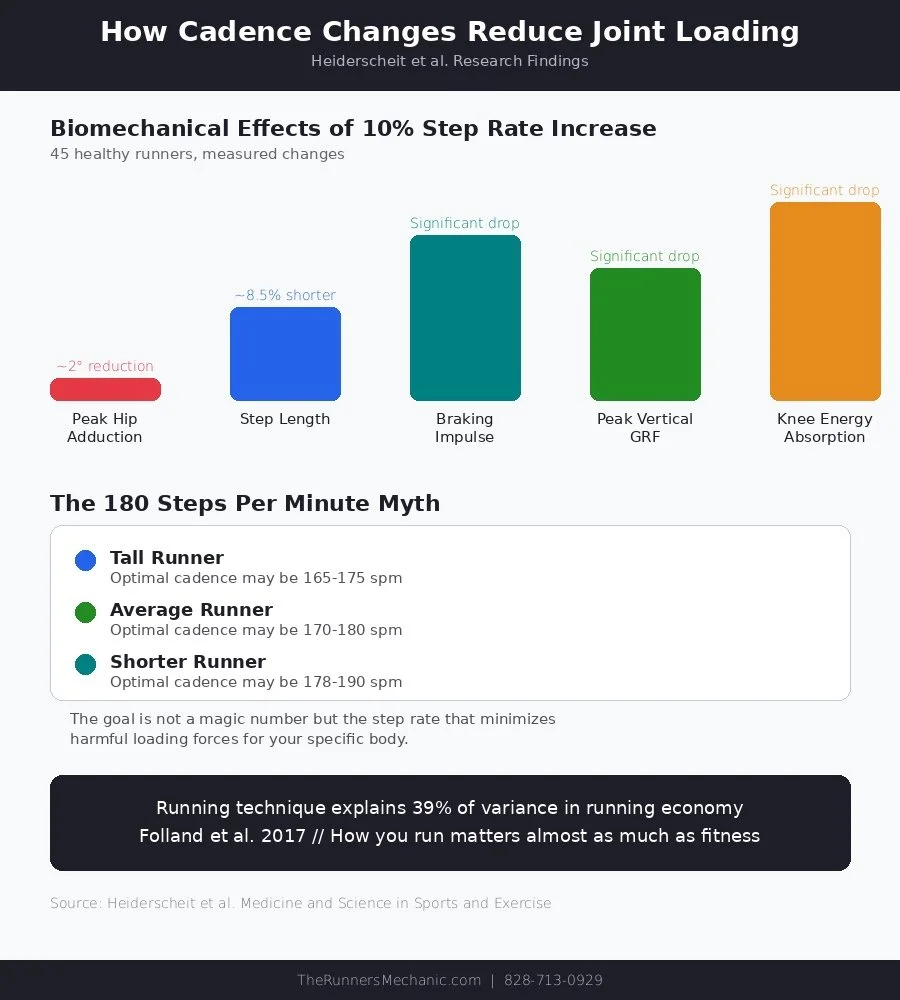
Research by Heiderscheit and colleagues showed that increasing step rate by just 5 to 10% produces significant changes in running biomechanics across 45 healthy runners. A 10% increase in cadence reduced peak hip adduction by approximately 2 degrees, decreased step length, lowered braking impulse, reduced peak vertical ground reaction force, and cut energy absorption at the knee. All of these changes reduce the mechanical loads associated with common running injuries.
The beauty of cadence retraining is its simplicity. A runner with a natural cadence of 160 steps per minute trains at 168 to 176 steps per minute using a metronome or music matched to the target beat. The auditory signal is easy to internalize, and many runners report that they can "hear" the correct rhythm even weeks after they stop using the metronome.
But cadence is not a universal fix, and this is where clinical expertise matters. A runner whose primary fault is excessive hip drop needs hip-focused retraining, not cadence work. A runner with anterior tibial stress fractures needs loading rate reduction, which may or may not involve cadence changes. The clinician's job is to identify the right biomechanical target and match the feedback modality to it.
"A 10% increase in step rate reduced peak hip adduction, step length, braking impulse, and peak vertical ground reaction force in 45 healthy runners" Heiderscheit et al. Medicine and Science in Sports and Exercise
Some gait retraining protocols combine visual and auditory feedback simultaneously. A runner might watch their loading rate on a screen while matching a metronome beat, giving the brain two convergent signals that reinforce the same correction. This dual-channel approach is particularly effective for runners who need multiple biomechanical variables corrected at once.
How Cadence Changes Reduce Joint Loading by Up to 50%
The relationship between cadence and joint loading is one of the most well-documented findings in running biomechanics research. When you increase your step rate, you naturally shorten your stride, and shorter strides reduce the braking forces that slam through your knees, shins, and hips with every foot strike.
Davis and colleagues demonstrated that real-time gait retraining reduced average vertical loading rates by 50% in runners at high risk for tibial stress fractures. Compare that to the roughly 10% reduction you get from switching to a maximally cushioned running shoe. The numbers are not even close.
Running technique itself explains a significant portion of running performance. Folland and colleagues found in 2017 that biomechanical variables accounted for 39% of the variance in running economy among trained runners. That means how you run matters almost as much as how fit you are when it comes to efficiency and injury risk.
The cadence sweet spot varies by runner, which is why the old "180 steps per minute" rule is an oversimplification. A tall runner with long legs might run most efficiently at 170, while a shorter runner might naturally land near 185. The goal of cadence retraining is not to hit a magic number but to find the step rate that minimizes harmful loading forces for your specific body.
When cadence retraining is done through the faded feedback protocol, runners retain their new step rate without conscious effort. The metronome teaches the rhythm during training sessions, and the fading process transfers it to automatic motor control. Three months later, the runner hits the same cadence without any external cue.
For runners dealing with recurrent knee pain or shin stress, cadence-based gait retraining often produces noticeable relief within the first two weeks of the protocol.
Hip Mechanics Correction and Patellofemoral Pain That Disappears
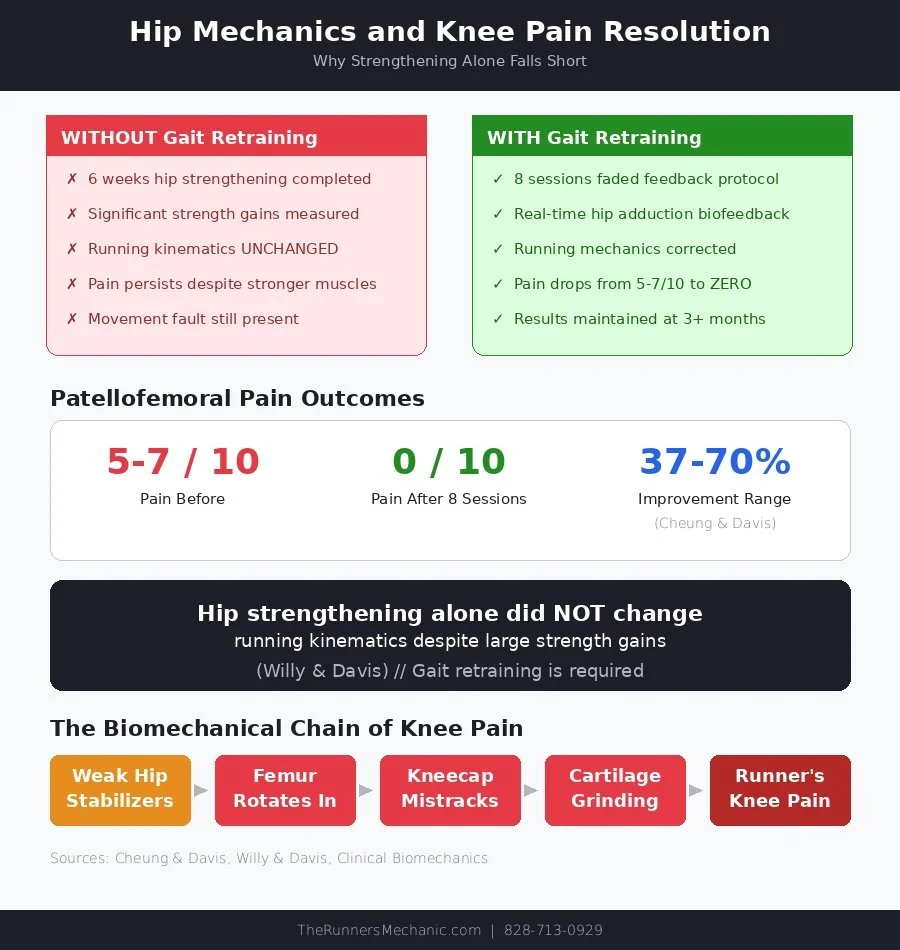
Patellofemoral pain syndrome is the most common running injury, and it is also one of the most responsive to gait retraining. Research by Cheung and Davis showed that gait retraining targeting vertical impact loading produced dramatic pain reduction in runners with patellofemoral pain, with improvements ranging from 37% to 70% across participants.
In a separate study, runners with kneecap pain rated at 5 to 7 out of 10 on the pain scale reported zero pain after completing eight sessions of the faded feedback protocol. Not reduced pain. Zero.
The connection between hip mechanics and knee pain is biomechanical. When your hip adductors are weak or your gluteus medius fails to fire at the right moment during stance phase, your femur rotates inward. That inward rotation pulls the kneecap off its tracking groove, grinding it against the femoral condyle with every stride. Over thousands of repetitions per run, that grinding produces the deep aching pain runners describe behind or around the kneecap.
Traditional treatment for patellofemoral pain focuses on strengthening the hip muscles. But the Willy and Davis study proved that six weeks of isolated hip strengthening, despite producing measurable strength gains, did not change running kinematics at all. The runners were stronger but still ran with the same faulty mechanics.
Gait retraining fixes this gap. By giving the runner real-time feedback about hip adduction angle or contralateral pelvic drop during running, the clinician targets the exact moment in the gait cycle where the fault occurs. The runner's nervous system learns to activate the hip stabilizers at the right time and with the right intensity, and the knee tracking problem resolves.
Miriam Salloum at The Runner's Mechanic sees this pattern frequently. Runners come in after months of stretching, foam rolling, and hip exercises with persistent kneecap pain. A gait analysis reveals the underlying movement fault, and targeted retraining eliminates the mechanical cause rather than just managing the symptoms.
Impact Loading Reduction and Tibial Stress Fracture Prevention
Tibial stress fractures are among the most feared running injuries because they mean weeks or months of zero running. They develop when the cumulative loading on the tibia exceeds the bone's ability to remodel and repair. And the biggest modifiable risk factor for tibial stress fractures is vertical loading rate, which is exactly what gait retraining targets.
Crowell and Davis published research showing that gait retraining significantly reduced both vertical loading rates and impact peaks in runners at high risk for tibial stress reactions. The improvements held at a one-month follow-up, and one participant maintained the gains when tested a full year later.
The mechanism is straightforward. Every time your foot strikes the ground, force travels through your tibia. The speed at which that force reaches its peak, called the loading rate, determines how much stress the bone absorbs. A runner who lands with a heavy heel strike and a stiff leg generates a sharp spike of force that the tibia must absorb in milliseconds. A runner who lands with a slightly flexed knee and a softer initial contact spreads the same total force over a longer time window, dramatically reducing the peak stress.
Gait retraining teaches the second pattern. Using real-time feedback of tibial acceleration measured by a small sensor strapped to the shin, runners learn to modulate their landing mechanics until the loading spike flattens. The change feels subtle from the runner's perspective, but the biomechanical data shows reductions of 30 to 50% in peak loading rate.
This matters beyond stress fractures. High vertical loading rates are associated with plantar fasciitis, medial tibial stress syndrome commonly called shin splints, and even some types of ankle pain. Reducing loading rate through gait retraining creates a protective effect across multiple injury types simultaneously.
For runners returning to running after a stress fracture, gait retraining is not optional. Without correcting the loading pattern that caused the fracture, the recurrence rate is unacceptably high. The bone heals, but the movement fault that broke it is still running the show.
How Long Gait Retraining Takes and Why the Results Last
The standard gait retraining protocol runs eight sessions over two to four weeks. That timeframe surprises most runners who assume that changing a movement pattern they have repeated millions of times would take months. But the research consistently shows that meaningful biomechanical changes occur within the first few sessions, and the faded feedback process locks them in.
Sessions start at 15 minutes and gradually build to 30 minutes of continuous running. The total clinical contact time is roughly three to four hours spread across the entire protocol. For a runner who has spent months or years dealing with chronic injury, that is a remarkably small investment for a lasting biomechanical correction.
Retention is the critical question. If the changes disappear after three months, the protocol would be no better than a temporary brace or tape job. But the evidence tells a different story.
Crowell and Davis verified retention at one month in their loading rate study. Willy and Davis confirmed that mirror-based hip mechanics corrections persisted at three months. And in one extended follow-up case, a runner maintained reduced loading rates a full year after completing the protocol with no additional feedback sessions.
“Mirror gait retraining maintained improved hip mechanics and sustained pain relief at three-month follow-up without additional intervention”
The durability of these results comes down to motor learning principles. The faded feedback protocol does not teach a conscious skill that requires attention to maintain. It rewires an automatic motor pattern at the subcortical level. Once your cerebellum and basal ganglia encode the new movement, it runs in the background the same way your old pattern did.
Think of it like learning to type. At first you consciously hunt for each key. After enough practice, your fingers move automatically without thought. Gait retraining does the same thing for your running stride, except it accomplishes it in weeks rather than months because the biofeedback accelerates the learning curve.
Runners who complete gait retraining at The Runner's Mechanic often notice that the corrected pattern feels natural within two weeks. By the end of the eight sessions, the old pattern feels foreign.
Why The Runner's Mechanic Is Where Asheville Runners Fix Their Stride
Miriam Salloum MPT COMT OCS built The Runner's Mechanic Physical Therapy Clinic on a clinical model that mirrors two of the most respected running medicine programs in the country. The UVA Speed Clinic and the Harvard Spaulding National Running Center both use instrumented gait analysis and evidence-based retraining protocols as the foundation of their treatment approach. Miriam brings that same standard to runners in Asheville and western North Carolina.
Her background is what separates a clinical gait retraining program from a coaching session. A BS in Biology from UNC Chapel Hill, a Master of Physical Therapy from East Carolina University, an internship at the Mayo Clinic biomechanics and motion analysis laboratory, and experience as an Olympic Training Site physical therapist for bobsled and track athletes in 2016 created a clinician who understands running biomechanics at the research level and applies it at the treatment level.
Miriam studied under Sue Falsone in 2015, a pioneer in functional movement and athletic rehabilitation. She is a national presenter for North American Seminars, which means she teaches other physical therapists the methods she uses daily with her own patients.
North Carolina is a direct access state, which means you do not need a physician referral to see a physical therapist. You can book your evaluation directly. The clinic is cash-based and accepts HSA and FSA payments. The all-inclusive runner's evaluation runs $350 for a two-hour session that includes video gait analysis, biomechanical assessment, and the beginning of a personalized retraining plan.
The clinic is located at 208 Charlotte Highway, Suite 301, Asheville NC 28803. You can call 828-713-0929 or email runnersmechanic@gmail.com to ask questions before scheduling.
Frequently Asked Questions About Gait Retraining
Does gait retraining actually work or is it just another running trend?
Gait retraining is backed by over two decades of peer-reviewed clinical research. A 2018 randomized controlled trial of 390 runners showed a 62% reduction in injuries over 12 months. Multiple studies by Davis, Crowell, Willy, Heiderscheit, and Cheung have demonstrated measurable biomechanical changes that persist months after the protocol ends. This is not a trend. It is an evidence-based clinical intervention.
How many sessions does gait retraining take?
The standard faded feedback protocol runs eight sessions over two to four weeks. Each session lasts 15 to 30 minutes of treadmill running with real-time biofeedback. Most runners notice changes in how their stride feels within the first two to three sessions, and research shows the corrections are retained for months to a year after the protocol ends.
Can I do gait retraining on my own with a metronome app?
You can practice cadence adjustments with a metronome, but self-directed cadence work misses the systematic fading that makes changes permanent. Without a clinician identifying which biomechanical variable needs correction and progressively removing feedback at the right pace, most runners revert to their old patterns within weeks. The faded feedback protocol is specifically designed to transfer corrections into automatic motor control.
Is gait retraining just for injured runners?
No. The Chan et al. 2018 study specifically used novice runners who were not yet injured and still showed a 62% injury reduction. Gait retraining is as much about prevention as it is about treatment. If a gait analysis reveals risk factors like high vertical loading rates or excessive hip adduction, retraining those patterns before they cause pain is the smartest investment a runner can make.
Will gait retraining slow me down?
Research by Folland and colleagues showed that running technique accounts for 39% of the variance in running economy. Fixing biomechanical inefficiencies can actually improve performance because you waste less energy fighting poor mechanics. Many runners report feeling lighter and faster after completing a retraining protocol, not slower.
How is gait retraining different from running form coaching?
Running form coaching typically relies on verbal cues and visual demonstration. Gait retraining uses instrumented biofeedback tied to measurable biomechanical metrics, follows a validated clinical protocol with systematic feedback fading, and is delivered by a licensed physical therapist who understands musculoskeletal anatomy and motor learning science. The difference is precision, personalization, and lasting neuromotor change versus temporary conscious effort.
Related Running Physical Therapy Topics
Running gait analysis breaks down every phase of your stride using high-speed video and biomechanical measurement to identify the exact faults driving your pain or limiting your performance.
What gait analysis shows covers the specific metrics your clinician measures during a gait evaluation including vertical loading rate, cadence, hip adduction angle, and ground contact time.
Return to running after injury requires a structured protocol that combines progressive loading with biomechanical correction so you do not fall back into the same movement faults that caused the injury.
Running form improvement goes beyond simple cues and requires an understanding of how your body moves through stance and swing phase to make corrections that actually transfer into your natural stride.
Strength training for runners builds the muscular foundation that supports corrected mechanics, but research shows that strength alone does not change running kinematics without gait retraining.
Running physical therapy at The Runner's Mechanic integrates manual therapy, biomechanical assessment, gait retraining, and progressive strengthening into a treatment model designed specifically for runners.
Your Running Injuries Have a Biomechanical Address and Gait Retraining Finds It
Every running injury has a mechanical cause, and that cause lives somewhere in your gait cycle. A high loading rate stresses the tibia. Excessive hip adduction grinds the kneecap. An overextended stride hammers the hamstring. You can treat the symptom for months with ice, stretching, and rest, or you can fix the mechanical fault in eight sessions and stop the cycle permanently. The Runner's Mechanic Physical Therapy Clinic in Asheville starts every case with objective measurement, identifies the biomechanical fault driving your pain, and uses clinically validated gait retraining protocols to correct it. Miriam Salloum has spent over two decades helping runners do exactly this, and her results reflect the same evidence-based methods used at Harvard and UVA. Call 828-713-0929, email runnersmechanic@gmail.com, or book your evaluation online to start running without pain.
Disclaimer
This content is provided for educational and informational purposes only and does not constitute medical advice, diagnosis, or treatment. Running biomechanics and injury risk vary by individual. Consult a licensed healthcare provider or physical therapist before starting any gait retraining program or making changes to your running mechanics. The Runner's Mechanic Physical Therapy Clinic and its clinicians are not responsible for injuries resulting from self-directed application of the concepts discussed here.