
One of the most common questions we hear at The Runner's Mechanic is some version of this: "I feel better — so why can't I just start running again?" It is a completely understandable impulse. The pain has quieted, the swelling is gone, and the urge to lace up and head out the door is almost irresistible. But knowing how to return to running after injury in a way that is both progressive and evidence-based is precisely what separates a full, durable recovery from a frustrating cycle of re-injury. Here in Asheville and across western North Carolina, we work with runners every week who have made that mistake once — and are determined not to make it again.
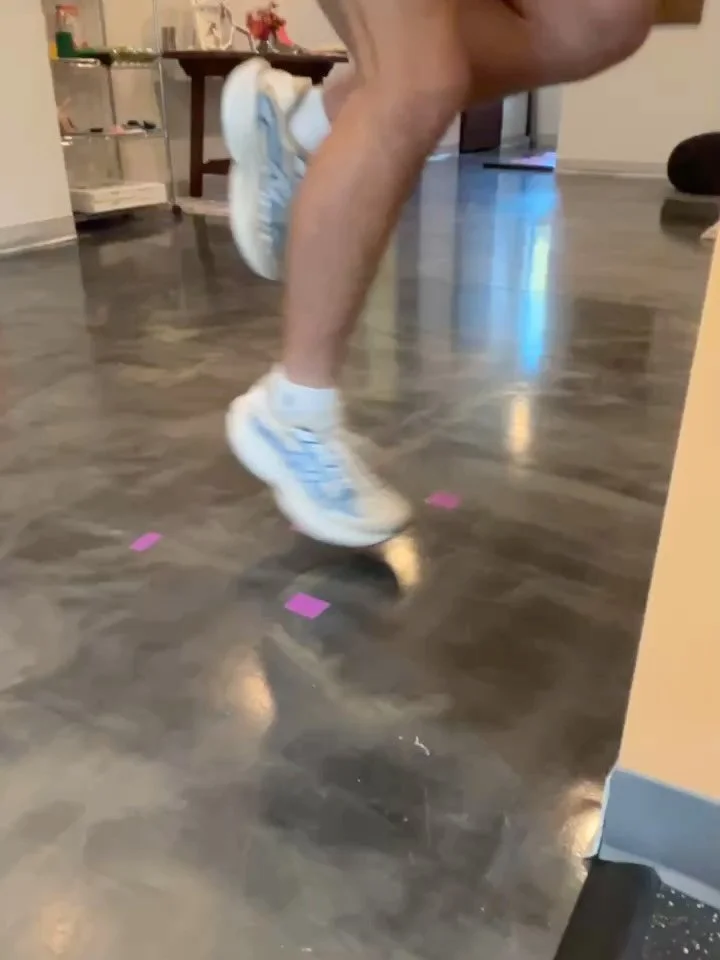
Follow us on Instagram @runnersmechanic_pt
Why "Feeling Better" Is Not the Same as "Ready to Run"
Pain is a useful signal, but it is a lagging indicator of tissue health. By the time discomfort resolves, the underlying tissue — whether tendon, muscle, bone, or cartilage — may still be operating well below its pre-injury capacity. Research consistently shows that tendons, for example, can feel pain-free at loads far lower than what running actually demands. The same is true for stress fractures, muscle strains, and post-surgical repairs. Subjective comfort is a starting point for return-to-run planning, not a finish line.
Beyond tissue healing, there is a second layer that is frequently overlooked: neuromuscular coordination. Injury disrupts the communication between your nervous system and the muscles that stabilize and propel you through the gait cycle. Even after the structural damage has healed, that coordination deficit persists. You may be compensating without knowing it — loading the opposite hip, shortening your stride on one side, or subtly altering your foot strike to protect a previously painful area. These compensations, left unaddressed, become the mechanism for the next injury.
The Role of Agility and Plyometrics in Recovery
This is where the return-to-run process becomes more nuanced than simply following a walk-run interval schedule. Before a runner should be absorbing the full repetitive impact of continuous running, the neuromuscular system needs to be progressively re-loaded through agility and plyometric training. These are not optional add-ons — they are a clinical necessity.
Many runners are surprised to discover the degree of asymmetry that persists on the injured side even after pain has resolved. Decreased coordination, reduced elastic energy return through the Achilles and plantar fascia, and diminished single-leg stability are all measurable deficits that a well-structured evaluation can identify. Agility drills and plyometric progressions — lateral bounds, single-leg hops, reactive change-of-direction tasks — systematically restore these qualities in a controlled environment before the demands of the road or trail expose them.
A return-to-run program that skips this phase is essentially asking a runner to go from zero to sixty without checking whether the engine is actually ready. The result is predictable.
What a Structured Return-to-Run Program Actually Looks Like
At The Runner's Mechanic, the return-to-run process is built around identifying the ROOT CAUSE of the original injury, not simply managing its symptoms. That process typically involves several interconnected components:
- Biomechanical and gait analysis — to identify movement patterns that contributed to the injury and assess whether compensations have developed during the recovery period.
- Strength and mobility assessment — because deficits in hip abductor strength, ankle dorsiflexion, or thoracic mobility are frequently the upstream drivers of lower-extremity running injuries.
- Progressive loading protocols — structured to respect tissue healing timelines while systematically increasing mechanical demand in a way the body can adapt to.
- Neuromuscular re-training — including the agility and plyometric work described above, calibrated to the specific injury, the runner's current capacity, and their target activity level.
- Run monitoring and load management — tracking volume, intensity, and surface to ensure the transition back to full training is gradual and data-informed.
If you are based in Asheville or the surrounding western North Carolina region and are navigating a return from injury, working with a clinician who understands running-specific biomechanics is not a luxury — it is the most efficient path back to the sport you love. You can learn more about how this process is structured here.
Frequently Asked Questions
How do I know if I am truly ready to start running again?
A reliable clinical benchmark is the ability to perform single-leg tasks — hopping, bounding, and change-of-direction movements — symmetrically on both limbs without pain, compensation, or significant fatigue. If there is a visible or measurable difference between sides, the neuromuscular system is telling you it needs more preparation. A formal evaluation can quantify these deficits and give you a clear, objective answer rather than a guess.
Is it safe to follow a generic return-to-run plan I found online?
Generic plans — such as couch-to-5K style walk-run progressions — can be a reasonable framework for some runners, but they are not designed to account for the specific injury you sustained, the tissue involved, or the compensatory patterns you may have developed. They also do not address the strength and coordination deficits that are almost universally present after injury. A plan built around your individual presentation is always going to be safer and more effective than one built for no one in particular.
Book an Evaluation
If you are ready to return to running with a clear plan and clinical support behind you, we would be glad to help. Reach out to contact us to book an evaluation at The Runner's Mechanic in Asheville, NC, and take the first step toward a recovery that actually holds.