How to Handle the “Uptick” in the Tick Situation!
A Local Medical Expert Weighs In
How to Handle the “Uptick” in the Tick Situation!
A Local Medical Expert Weighs In
So… this month I am taking a brief departure from the world of running medicine to share information I was curious about. This summer on the trails I encountered more ticks than any other summer I could remember. As a trail runner, ticks have always been a concern due to the risk of Lyme disease, but I seemed to encounter them infrequently. This summer has really been different and I had a conversation with a friend who also noticed this trend.
This is my conversation with Carriedelle Wilson Fusco, MSN, FNP-BC, who currently works at MAHEC. Carriedelle was kind enough to take the time to share this information in my newsletter. I hope this helps all of you outdoor enthusiasts to stay healthy!
Question 1: Why are the tick populations so high in our area right now?
Several tick species are quickly expanding to areas where they have not been seen in hundreds of years or ever due to increased white tail deer populations, changes in development, and warming temperatures. Increasing white-tailed deer populations including in urban areas where they were rarely seen in the past is a driving source of tick expansion.
Black legged ticks are ranging increasingly far south and bringing Lyme’s disease.
Dog ticks and lone star ticks are increasing in numbers in WNC
Question 2: What are the best practices for checking for ticks after being outside or in the woods?
Do a full tick check when you return from any outdoor area that could involve ticks exposure. Until recently this was thought to be in less urban settings but ticks are now common in urban areas and you should consider doing a check after time in your yard if exposed to talk grasses or bushes where ticks are often found.
Check your clothes as ticks can travel in on clothing. Washing can be effective but only in hot water or in a hot dryer. Ticks can survive a cold wash but will be killed after ~10 min in a hot dryer.
Check gear and pets. Even treated pets can carry ticks into your home.
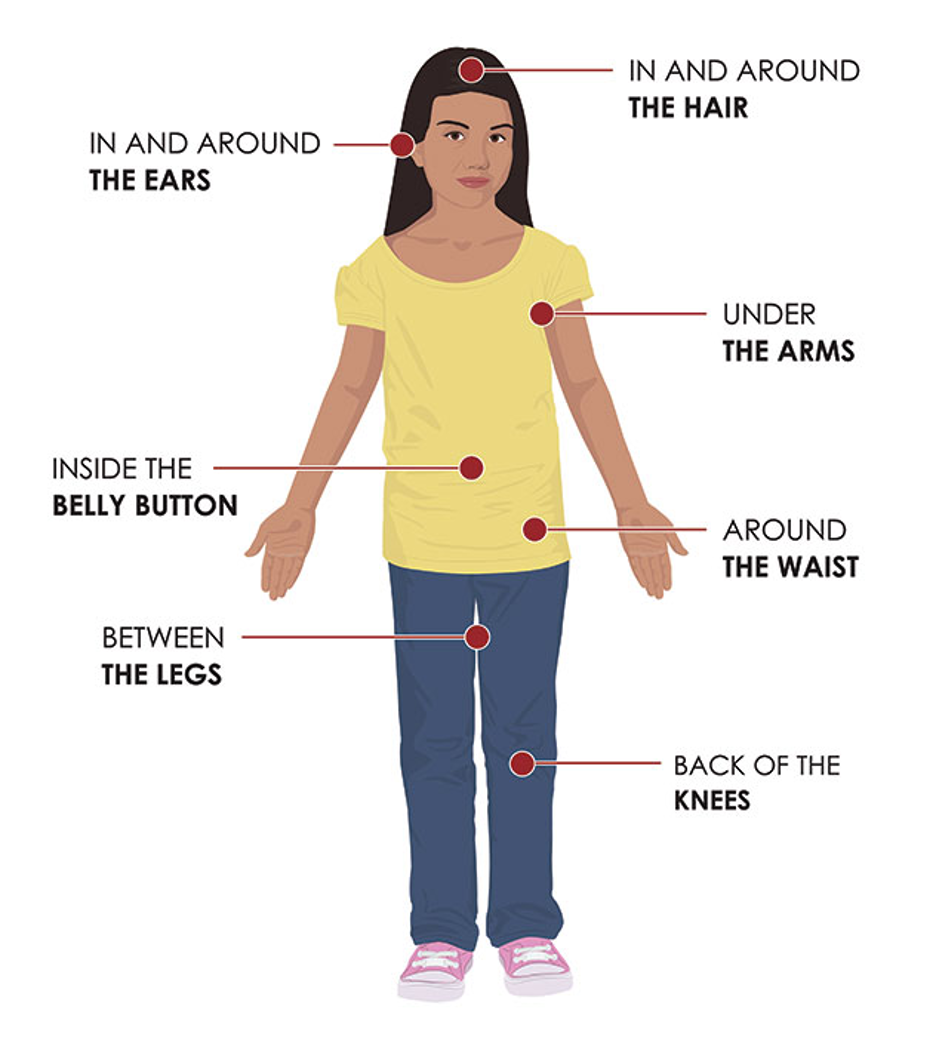
Showering within 2 hours of potential exposure is associated with decreasing your risk of Lyme’s. Unattached ticks are washed off during a shower and this can be a good time for your tick check. Use a mirror and a room with good lighting to exam areas that are harder to see. Or have a friend or family member assist. See the image below that highlights the areas to pay special attention to like under your arms, belly button, or around the ears.
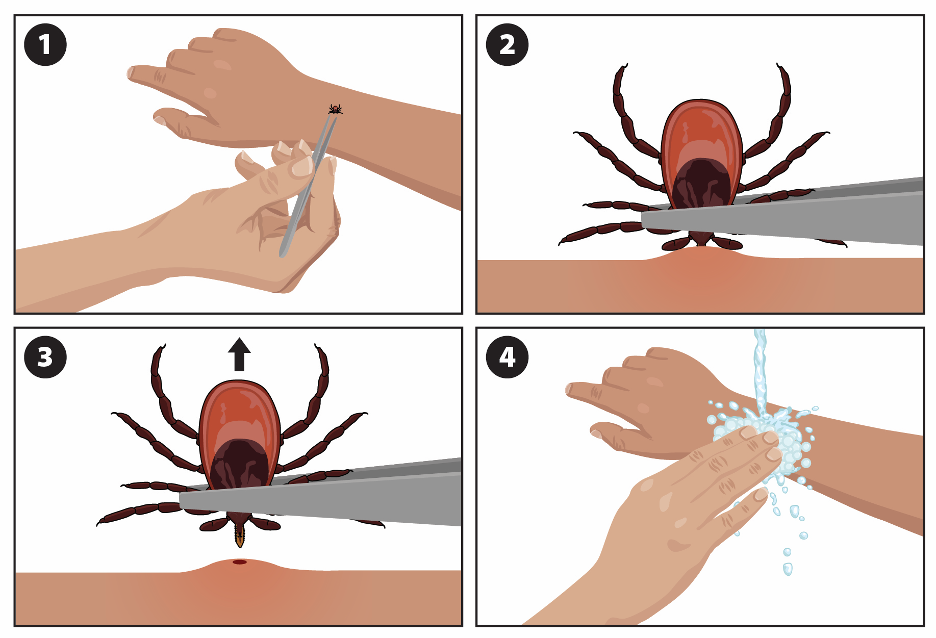
Question 3: If I see a tick embedded in my skin, what is the best way to remove it? Do not wait to remove it by scheduling an appointment - remove it as quickly as possible. Delayed removal increases the risk of a tickborne illness.
Use tweezers to grasp the tick as close to the skin as possible. Use gloves if you have them. Pull with steady pressure, do not pull quickly or twist as this can result in a partial removal. After removal dispose of the tick - you can flush it in the toilet, place in a jar with bleach or rubbing etoh, or place it in a piece of tape.
Wash the area ideally with soap and water. If you don’t have access to clean water and soap you can use hand sanitizer or rubbing alcohol if that is what you have avail.
If the ticks head remains partially embedded you can use the tweezers to try and extract but if it is too deeply embedded do not cause skin damage to remove just clean and cover the area.
Monitor for signs and symptoms of infection and especially any rash and follow up immediately with your medical provider for any redness or rash.
In the past a common approach was to heat a needle and place it on the tick or using petroleum jelly or causing it to back out. DON’T do this! This could potentially increase your risk of tickborne illness.
Question 4: Should I be concerned about Lyme Disease with EVERY tick I have to remove and when should I contact my medical provider?
Only black legged ticks can cause Lyme’s disease. It is also variable based on where you live. In WNC we now have significantly more Lyme’s disease than previously and approaches are changing. The CDC recommends post exposure prophylaxis ie a dose of antibiotics in areas. WNC is now considered an area where this is indicated. If you remove an engorged tick treatment with a single dose of doxycyline should occur within 72 hours. Below link has more specific information
https://www.cdc.gov/lyme/resources/pdfs/lyme-pep-low-ink-p.pdf
Remember prevention is primary so steps to avoid getting ticks to begin with is key.
Rapid removal is also important as the tick needs to have been attached for ~24 hours for Lyme’s to be spread.
Question 5: What are the symptoms of Lyme disease?
The first symptoms of Lyme’s is a rash known as erythema migrans that appears in approx 75% of patients at the site ot the tick bite. It will start anywhere from 3 to 30 days after and expands over time with a bulls eye appearance
Other symptoms often include headache, fever, body aches, joint pain, and swollen lymph nodes.
If untreated some patients develop neurological and more rarely cardiac issues.
Also, remember that Lyme’s is not the only tickborne illness in WNC - if you have fever, rash, headache, achy joints, or other concerning symptoms after a tick bite contact your medical provider.
Question 6: What are the current testing and treatment procedures for Lyme disease
Do not send a tick to be tested. These labs are not well regulated and will also provide delayed information
Generally if symptoms occur with known or potential history of tick bite clinicians will treat without testing. Time is of the essence. Also, false negatives are not uncommon and can lead to delays in care.
Testing does exist for unclear cases and can be done by your local medical provider if deemed appropriate.
Question 7: Is there anything I can do to prevent ticks from latching on to me when I run or hike outside?
Again - prevention is key!
If possible avoid areas that are high risk for ticks if possible with tall grasses or bushes by staying on trails.
It is impossible to completely avoid ticks so ensure you are utilizing other tools for prevention.
Consider treating your clothes with 0.5% permethrin - especially boots, socks, and pants. Permethrin can be purchased at local outdoor stores.
Wearing light colored clothes helps with seeing ticks on clothing, tucking pants into socks makes it more difficult for tick to reach your skin and attach
Using insect repellent regularly: DEET and picaridin (my personal preference) have both been shown to be extremely effective against ticks
Other effective products include IR3535, oil of lemon eucalyptus, and 2-undecanone
Botanical and essential oils lack evidence to support their use despite their more pleasing smell.
Treating your pets for ticks is also an important measure to decrease your risk of tick exposure.
Also setting up perimeters around your yard to decrease ticks can be effective along with measures to decrease deer and rodents.
Sources:
AAFP